
The Collaborative for Academic, Social, and Emotional Learning (CASEL) has identified five competencies that are crucial to effective social and emotional learning for children and adults. Self-awareness is one of those competencies, and this course will guide educators through personal self-examination. Read more
Rating
Content
Price


The Collaborative for Academic, Social, and Emotional Learning (CASEL) recognizes five core competencies that promote intrapersonal, interpersonal, and cognitive competence. In this course, you will focus on the self-management competency. Read more
Rating
Content
Price

The Collaborative for Academic, Social, and Emotional Learning (CASEL) has identified five competencies that are crucial to effective Social and Emotional Learning for children and adults. Social-Awareness is one of those competencies and this course will guide educators through the examination of your personal self. Read more
Rating
Content
Price
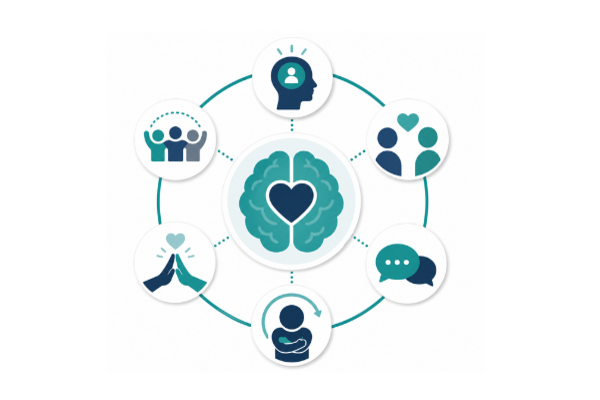
Educators must develop and continue to refine their skills in social-emotional learning (SEL). Students need not only knowledge of academic content but also knowledge of themselves and how to interact with others. SEL is not a separate program or discipline but rather is a way of teaching students to lead and connect for both academic success and emotional well-being. This introductory course provides basic information about social-emotional learning practices in the classroom. Its intention is to begin an educator on a path of considering how to include the development of these competencies in their school settings. Read more
Rating
Content
Price

Implicit Bias refers to the attitudes, beliefs or stereotypes that affect our understanding, actions and decisions in an unconscious manner. These biases often manifest themselves in the forms of microaggressions and stereotypes. Everyone has Implicit Bias, but few of us are aware of it and how it impacts our daily experiences. For educators, Implicit Bias may have a negative effect on our students’ behavioral and academic outcomes. This session shares real-life examples of different Implicit Bias, Microaggressions and Stereotypes, how they impact our schools and provides practical strategies to address and confront them in ourselves and others. Read more
Rating
Content
Price

The ESP Professional Growth Continuum, published by NEA, identifies Technology as one of the eight Universal Standards that describe what education support professionals should know and be able to do. If you haven't spent a lot of time exploring the technology standard, that is OK! This course, which contains seven lessons, will help you gain a solid understanding of technology at work. The ESP Professional Growth Continuum outlines skills and knowledge related to technology (and all of the eight Universal Standards) at three levels of practice. Those are: Foundational (I know this) Proficient (I do this consistently) Advanced/Mastery (I lead this) This self-paced, independent study course can be explored on your own, or with colleagues. It has been developed by NEA members and staff specifically for ESPs, and features the perspectives of education support professionals just like you. Read more
Rating
Content
Price
Shopping cart
Your cart is empty